_edited_edited.jpg)


Top Features to Look for in a Multi Restaurant Delivery Software

The food delivery market is booming and showing no signs of slowing down. According to Statista, the global online food delivery market is projected to reach $1.65 trillion by 2027, growing at a CAGR of over 10% annually. For restaurant owners managing multiple outlets, keeping up with this demand isn't just about great food — it's about having the right technology in place.
That's where multi restaurant delivery software becomes a game-changer.
Whether you run a cloud kitchen, a franchise, or a group of independent restaurants, choosing the right software can mean the difference between streamlined operations and daily chaos. But with dozens of platforms on the market, how do you know which features actually matter?
This guide breaks it all down — simply, clearly, and practically.
What Is Multi Restaurant Delivery Software?
Multi restaurant delivery software is designed to build a centralized platform that lets restaurant businesses manage orders, deliveries, drivers, menus, and customer data across multiple locations or brands from a single dashboard.
Think of it as your operations command centre. Instead of juggling separate tools for each outlet, everything from order routing to real-time tracking flows through one unified system.
Why Getting the Right Features Matters
A McKinsey & Company report found that restaurants using integrated delivery management platforms saw up to 30% improvement in delivery efficiency and reduced order errors by nearly 25%. The right features don't just save time — they directly impact your bottom line, customer satisfaction scores, and driver retention.
So, what should you actually be looking for?
1. Centralised Order Management Dashboard
This is the foundation of any strong multi restaurant delivery software. A centralised dashboard lets you view and manage all incoming orders across every location in real time without switching between tabs or apps.
What to look for:
Live order tracking across all outlets simultaneously
Auto-routing of orders to the nearest or best-available driver
Colour-coded order status (pending, preparing, out for delivery, delivered)
Ability to pause or modify order flow per location
Why it matters: According to a Toast POS industry survey, 74% of restaurant operators say order visibility across locations is their top operational pain point. A unified dashboard eliminates this friction entirely.
2. Multi-Brand and Multi-Location Menu Management
Managing menus manually for 5 or 10 locations is a recipe for inconsistency. Your software should allow you to create, edit, and sync menus across all locations or customize them per outlet based on local demand.
Key capabilities to check:
Bulk menu updates pushed to all locations at once
Per-location pricing and item availability settings
Integration with third-party platforms like Zomato, Swiggy, or UberEats
Scheduled menu activation (e.g., breakfast vs. dinner menus)
This feature alone can save your team hours every week especially during seasonal updates or promotional campaigns.
3. Real-Time Delivery Tracking and Driver Management
Customers today expect transparency. A 2023 Deloitte consumer survey found that 83% of food delivery customers consider real-time tracking "very important" to their overall experience. That expectation doesn't disappear just because you're managing operations from the back end.
Your multi restaurant delivery software should offer:
GPS-enabled live driver tracking on a map
Automated driver assignment based on proximity and availability
Driver performance metrics (on-time rate, delivery time averages)
Two-way communication between drivers and the restaurant dashboard
Customer-facing tracking links via SMS or in-app notifications
A robust delivery management system also helps reduce last-mile delivery costs, which account for 53% of total shipping expenses according to Business Insider Intelligence.
4. Advanced Analytics and Reporting
Data is your competitive advantage. The best multi restaurant delivery software platforms don't just collect data — they turn it into actionable insights you can actually use.
Look for reports covering:
Order volumes per outlet, per day, per cuisine type
Average delivery time breakdowns
Revenue comparisons across locations
Customer retention and repeat order rates
Driver efficiency and route optimisation data
Having this visibility helps you make smarter decisions whether that's identifying an underperforming location, spotting a bestselling item, or adjusting staffing during peak hours.
Suggested Read : Build a Multi-Vendor Food Delivery App in 5 Easy Steps
5. Customer Management and Loyalty Tools
Acquiring a new customer costs 5x more than retaining an existing one and that's even more true in the hyper-competitive food delivery space. Look for platforms that include built-in CRM (Customer Relationship Management) features.
Essential CRM capabilities:
Customer order history and preference tracking
Loyalty points or rewards programme integration
Automated push notifications and SMS/email campaigns
Feedback and rating collection after each delivery
Segmentation tools for targeted promotions
Platforms that support personalised marketing have been shown to increase repeat order rates by up to 40% (source: Epsilon Research).
6. Seamless Third-Party Integrations
No software lives in a vacuum. Your multi restaurant delivery software should connect smoothly with the tools you already rely on without needing a developer every time.
Critical integrations to verify:
POS systems
Payment gateways
Gps / Real time tracking tools
Inventory management systems
The ability to consolidate your entire tech stack through one central platform significantly reduces manual data entry, reconciliation errors, and operational lag.
7. White-Label Customer App and Website
If you're building a brand, you don't want your customers ordering through a competitor's platform. A good multi restaurant delivery software will offer a white-label solution, a branded app and ordering website that carries your restaurant's identity.
This typically includes:
Custom branding (logo, colours, UI design)
Your own domain and app store listing
In-app order tracking and support chat
Push notification capability for promotions
According to Statista, direct online orders (via branded apps or websites) carry 15–30% higher margins compared to third-party aggregator orders because you avoid commission fees entirely.
8. Automated Route Optimisation
Manual dispatch is slow, error-prone, and simply not scalable beyond a handful of drivers. The best delivery management software uses automated route optimisation to smoothen the entire process.
Features to look for:
Auto-assignment of delivery orders based on driver location and load
Route optimisation to reduce fuel costs and delivery time
Batch delivery support (multiple orders in one trip)
Dynamic re-routing based on live traffic data
A study by OptimoRoute found that AI-based route optimisation can cut delivery times by up to 20% and reduce fuel costs by up to 15% significant savings at scale.
9. Scalability and Cloud-Based Infrastructure
Your business today may be 3 locations in two years, it could be 30. You need software that grows with you, not one you'll outgrow in 18 months.
Scalability indicators:
Cloud-based hosting with automatic backups
No hard limits on the number of outlets, drivers, or orders
Modular pricing (pay for what you need, add features as you grow)
99.9% uptime SLA (especially critical during peak hours like weekends and lunch rushes)
Dedicated onboarding and technical support for new location rollouts
10. Compliance, Security, and Payment Safety
With customer data and financial transactions flowing through your platform, security is non-negotiable.
What to confirm:
GDPR or local data protection compliance (especially important for customer data)
End-to-end encryption for all transactions
Role-based access controls (not every employee needs access to everything)
Regular security audits and data backup protocols
A single data breach can cost a small food business its reputation and according to IBM's Cost of a Data Breach Report 2023, the average cost of a breach is now $4.45 million globally.
Now that you know exactly what to look for, here's one platform that checks every box — Yoyumm.
Why Yoyumm Stands Out as the Best Multi Restaurant Delivery Software
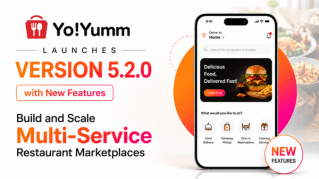
Yo!Yumm is a feature-rich, end-to-end multi restaurant delivery software built specifically for businesses managing multiple outlets, brands, or cloud kitchens. It combines everything covered in this guide into one powerful, intuitive platform so you're not stitching together five different tools just to run your operations smoothly.
What makes Yoyumm genuinely stand out is how it balances enterprise-grade functionality with ease of use making it just as practical for a 3-outlet chain as it is for a 50-location food brand.
All-in-one platform — order management, real-time driver tracking, menu control, analytics, and customer CRM all under one roof, with zero need for third-party add-ons
White-label ready — launch your own branded customer app and ordering website quickly, keeping your brand front and centre while cutting out aggregator commissions
Smart analytics dashboard — get granular performance data across every outlet, helping you make data-backed decisions on staffing, menus, and delivery zones
Seamless integrations — connects effortlessly with leading POS systems, payment gateways, and third-party delivery aggregators for a truly unified operation
If you're serious about scaling your delivery operations without the growing pains, Yoyumm is worth putting at the top of your evaluation list.
Suggested Read: Top On-Demand Food Delivery App Development Companies 2026
Final Thoughts: Invest in the Right Foundation
Choosing the right multi restaurant delivery software isn't just a tech decision it's a strategic business investment. The right platform reduces operational costs, improves delivery speed, boosts customer satisfaction, and gives you the data to make smarter business decisions.
The food delivery landscape is only getting more competitive. Restaurants that embrace the right technology today will be the ones leading the market tomorrow.
Start by identifying your biggest operational pain point whether that's driver management, order visibility, or customer retention and find a platform that solves that first, while also offering room to grow.


Comments